 As summer rolls around, balmy breezes quickly turn into sweltering heat waves. With ceiling fans, you can reduce your energy costs by keeping your home at a warmer temperature.
However, to ensure a comfortable home, you need the right ceiling fan size. The wrong size can oft result in poor airflow, excess noise, and wasted money. In order to get the right ceiling fan, you’ll need to account for your ceiling height, blade span, and square footage.
Quick Takeaways
- Measure the length and width of your room. Then, multiply to get the square footage.
- Match your room size to the fan blade span.
- Use the ceiling height to select the downrod, flush mount, or angled mount.
- Through proper sizing, you can achieve better airflow, comfort, and energy efficiency.
- Getting your ceiling fan professionally installed can ensure the best performance level and safe mounting.
What Does Ceiling Fan Size Actually Mean?
When people talk about the fan size, what they’re really referring to is the diameter of the blade span. This is measured from the tips of the blades. Fan size does not mean motor size or airflow performance (CFM).
Step-by-Step: How To Measure Ceiling Fan Size for Any Room
Let’s delve into the step-by-step approach you can take to measuring the fan size.
Step 1: Measure Your Room’s Square Footage
First, measure the length and width of your room. Multiply these measurements to get the square footage. If you have an unusual room shape, you’ll need to add together the square footage of each individual part of the room.
Step 2: Match Room Size to the Correct Fan Blade Span
Get the appropriate ceiling fan size for your square footage.
- Small Rooms (75 Square Feet or Less): 29 to 36 inches
- Medium Rooms (76 to 144 Square Feet): 36 to 50 inches
- Large Rooms (145 to 225 Square Feet): 50 to 53 inches
- Extra-Large Rooms (Over 225 Square Feet): 60 inches
Step 3: Measure an Existing Ceiling Fan
Check the original fan size to see what the correct blade span is.
Why Ceiling Height Matters When Measuring Fan Size
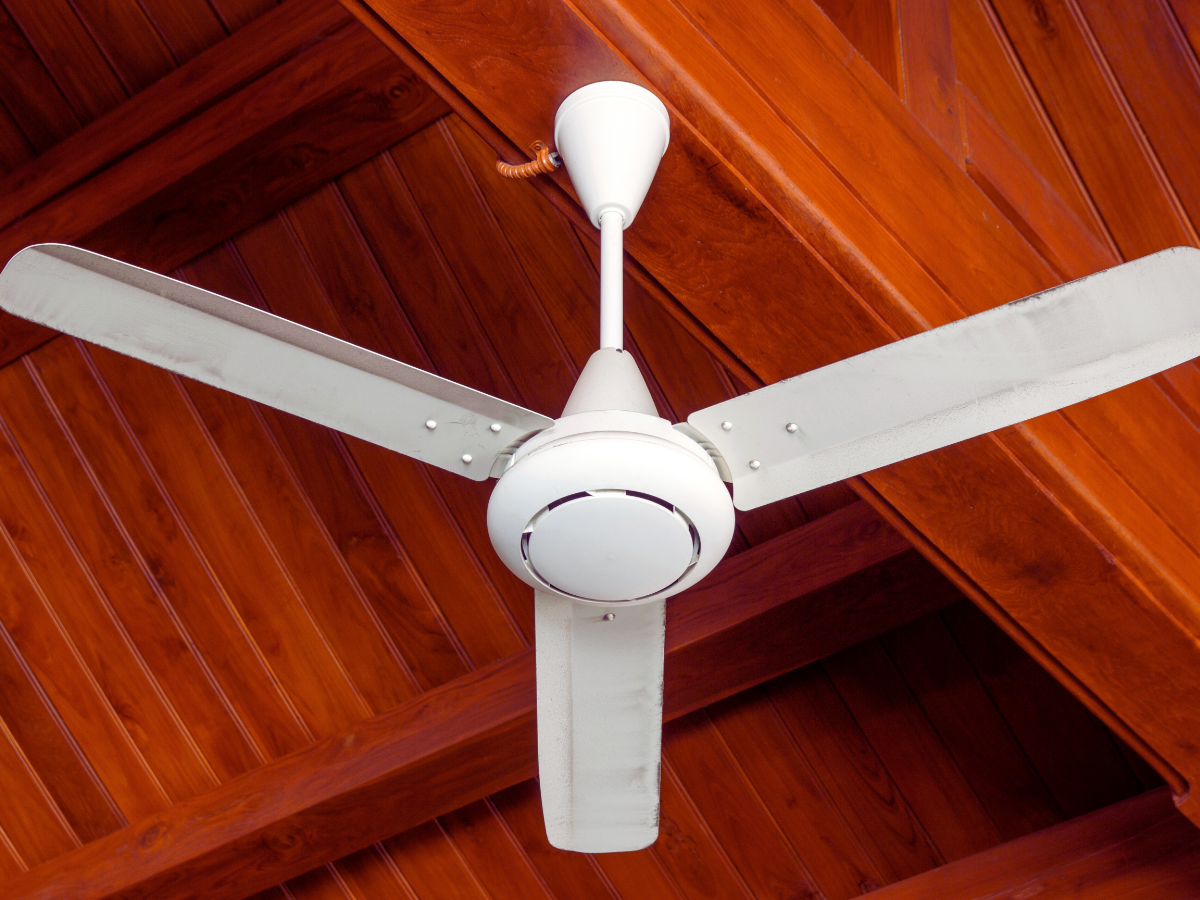 Ceiling height matters because it determines your airflow. Additionally, you also need the right safety clearance.
Standard Ceiling Heights (8 to 9 Feet)
Flush-mount fans are good for extra headspace. Otherwise, short downrod fans work well. However, downrod fans use more vertical space.
High Ceilings (10 Feet and Above)
For high ceilings, you’ll typically subtract 8 to 9 feet from the ceiling height to get the downrod size.
Sloped or Vaulted Ceilings
You’ll need to measure the slope. For steeper slopes, you’ll need an adapter.
Measuring Ceiling Fan Size for Large or Open-Concept Rooms
Getting an oversized fan won’t always work if the room is too large because some areas won’t be reached. Instead, install multiple fans in order to ensure consistent airflow throughout the room.
When To Use Multiple Ceiling Fans
You should consider using multiple fans if you want to achieve the following goals.
- Better coverage
- Increased airflow balance
- Improved noise reduction
Spacing Guidelines Between Multiple Fans
To ensure the safety of your family and fans, fans should be spaced apart about 2.5 to 3 times the distance of their blade diameter.
Common Ceiling Fan Sizing Mistakes To Avoid
Avoid these mistakes in order to get the best fan for your home.
- Only selecting fans based on appearance
- Not considering ceiling height
- Using an undersized fan for large or open spaces
- Getting an oversized fan for small rooms
- Not considering the mount or electrical box
Why Proper Ceiling Fan Installation Matters
Getting the right ceiling fan matters because it directly affects the airflow, noise, electrical safety, and wobble. Code-compliant mounting and proper electrical support are essential for your comfort and safety.
FAQs About Measuring Ceiling Fan Size
 How do I know what size ceiling fan I need?
By considering the square footage of the room and ceiling height, you can figure out which fan blade span you need.
What happens if my ceiling fan is too big or too small?
If you have the wrong ceiling fan size, it can result in poor airflow, inefficient energy consumption, and excess noise.
Does blade length or number of blades matter more?
The blade length is more important. This figure determines the diameter of the fan, which is also known as the blade span.
Can I install a large ceiling fan in a small room?
You can install a ceiling fan anywhere that it fits. However, a large ceiling fan in a small room will cause too much airflow and look oversized. Instead, the best option is to get a ceiling fan that is properly sized for the space.
How far should a ceiling fan be from the ceiling?
The ceiling fan should typically be placed 8 to 12 inches from the ceiling to ensure enough clearance.
Do outdoor ceiling fans use the same sizing rules?
Yes, they follow similar sizing rules. The main difference is that the fan may need to be a bit larger to ensure proper airflow in an outdoor environment.
Should I replace my electrical box when installing a new ceiling fan?
Unless it is clearly marked as a fan-rated box, you should generally install a new one. Ceiling fans are heavy and cause extra vibrations, which is why they require specialized fan boxes.
Need Help Choosing or Installing the Right Ceiling Fan? Call Mister Sparky
Don’t put up with any malarkey! Call Mr. Sparky! As Miami’s on-time electrician, we can provide professional sizing guidance, code-compliant installations, safe wiring, and proper mounting. For ceiling fan installation services in Miami and the surrounding areas, give us a call today.