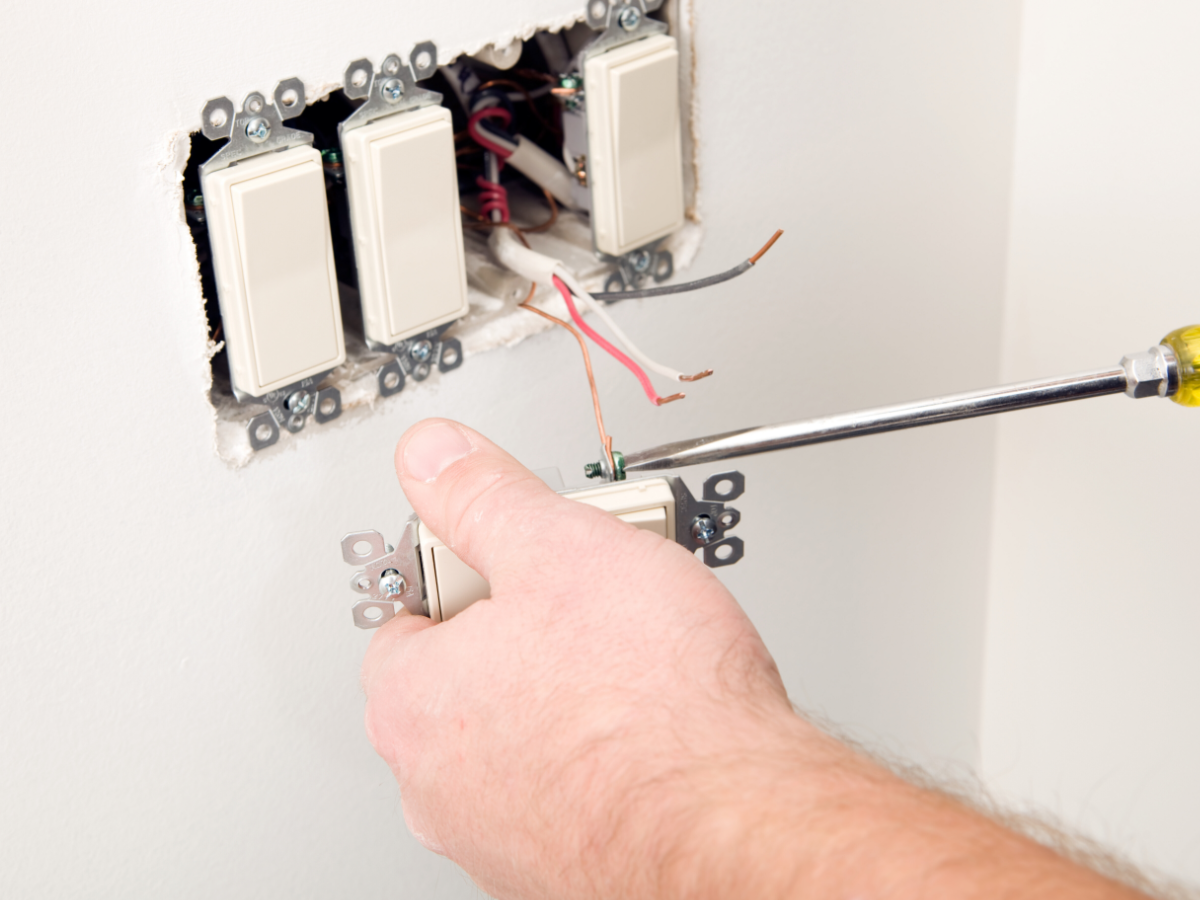
 An “open ground” is a common electrical system defect found during home inspections and outlet testing. It happens when the ground line of a three-prong outlet is not connected to your home’s electrical panel.
Ungrounded outlets can be a shock and fire hazard because they do not provide a safe escape route for stray current. If someone touches an energized wire or a connected unshielded metal appliance, the current will pass through their body, potentially causing serious injury.
If current flows outside its intended path, it can cause surrounding materials to overheat and ignite. Electronic devices also need an active ground to avoid damage during a power surge.
Ignoring open grounds puts people at risk of electrocution and equipment at risk of failure. It also violated electrical codes and may void some home insurance coverage. Below, we’ll cover how open grounds can affect your home and what you can do to resolve the issue.
Quick Takeaways
- An open ground means an outlet lacks a working grounding path.
- Open grounds are common in older homes and outdated wiring systems.
- An open ground can increase the risk of electrical shock and equipment damage.
- Outlet testers often identify open ground conditions.
- A licensed electrician can diagnose an open ground and recommend repairs.
What Does Open Ground Mean?
An open ground occurs when the grounding conductor, usually a bare copper or insulated green wire, is missing, broken, or detached from the outlet, junction box, or electrical panel, and can’t pass current back to its source. An open ground outlet is a three-slot receptacle with a disconnected grounding terminal.
How Does a Grounded Outlet Normally Work?
Grounding is a safety practice that protects people and property from shock, damage, and fire. It also stabilizes your circuitry by balancing its voltage, making it more reliable.
When a circuit is working normally, electricity flows directly to your powered devices. Unfortunately, events like electrical overloads, lightning strikes, and damaged wiring can cause excess current to travel outside of its intended path. Grounding ensures that the excess current will travel back to its source instead of through an alternate, dangerous path.
A grounded outlet works like a bypass conductor that directs electrical fault current through a dedicated, low-resistance route back to your electrical panel. When a conductor like metal or water touches a bare “hot” wire or short circuit, the outlet’s ground wire diverts the current and trips the connecting circuit breaker to cut power.
What Causes an Open Ground?
When a circuit is disconnected from its power source, there is no safe path for excess fault current to flow through, causing an open ground. Electrical problems that can cause this issue include:
• Missing ground wires: Your outlets use bare copper or green insulated grounding wires to connect their ground terminals back to your main electrical panel. If this wire is missing, the ground terminal will be disconnected from your circuit.
• Damaged grounding conductor: A broken, corroded, or otherwise defective ground wire or plate may not be able to direct current to your electrical panel.
• Loose electrical connections: If a grounding conductor becomes disconnected from its outlet terminal or junction box, its link to your electrical panel will fail.
• Older two-wire electrical systems: Before 1962, most home circuitry used hot and neutral wires only, creating open grounds by default.
• Improper outlet installation: If an installer fails to connect the ground wire to its outlet terminal or junction box or otherwise leaves it disconnected from the circuit, excess current will not have a safe path back to your electrical panel.
Why Is an Open Ground a Problem?
When a circuit is working properly, current flows only through its hot and neutral wires. If a circuit has a fault, like a short or a power surge, grounding systems intercept any stray current and redirect it through a continuous, low-resistance, and safe path back to your electrical panel. Once the panel receives the current, it instantly trips the connected breaker and disables the circuit, shutting off power.
An open ground prevents your circuitry from redirecting any fault current, stops your breakers from tripping, and makes your electrical system unsafe. This increases your risk of shock and electrocution. It also leaves electronics susceptible to damaging power surges that can melt or burn their components and increases the chance of fire.
Can an Open Ground Cause an Electrical Shock?
Open grounds can allow appliances to become energized at full 120-volt line voltage. If you touch this “hot” appliance, it can shock or electrocute you on contact.
Can an Open Ground Damage Electronics?
Open grounds can make surge protectors non-functional, meaning that they can’t protect your devices. When lightning strikes or power surges have no safe path back to your electrical panel, current will continue traveling through your devices, fry their components, and cause permanent damage.
How Do You Know If You Have an Open Ground?
Open grounds often remain hidden unless you deliberately go looking for them or experience an unexpected shock, appliance failure, or fire. Getting your outlets tested, reviewing existing home inspection reports, and undergoing a professional electrical safety inspection can help you identify issues before they cause a catastrophe.
Outlet Tester Results
A plug-in, three-light outlet tester uses light-up indicators to identify open grounds. If the tester’s “open ground” indicator lights up when the device gets plugged into an outlet, you should call an electrician.
Home Inspection Findings
When a house goes up for sale, an inspector must evaluate the home’s circuitry before the transaction can be completed. Any open grounds will be noted on their report. It’s common for inspectors to find ungrounded three-prong outlets in older homes that still have their original wiring installed.
Electrical Safety Inspections
The licensed electricians at Miami Mister Sparky can find open grounds by thoroughly evaluating your home’s circuitry. They can use digital multimeters to check your outlets for zero voltage between their hot and ground slots, indicating an open ground. They will also perform continuity testing along your circuits to find loose connections and disconnected ground wires and will verify that your electrical panel is properly bonded.
If you notice that your breakers are tripping more than usual or feeling an electric tingle or jolt when you touch an outlet faceplate or an electrical device, an open ground could be to blame. Discolored or melting outlets and prematurely failing appliances can also be signs of a problem.
How Do Electricians Fix Open Grounds?
Electricians can repair an open ground by identifying the source of the issue and making repairs. This commonly involves upgrading older, ungrounded wiring systems, reconnecting ground wires at your junction box or electrical panel, or reconnecting a grounding wire to an electrical outlet’s ground terminal.
Your electrician may also resolve an open ground by installing new ground fault circuit interrupter (GFCI) outlets in your home, although these outlets do not create a ground path. Instead, they work by cutting power instantaneously if they detect an imbalance between a circuit’s hot and neutral wires.
To ensure your electrical system is free from open grounds, professional testing is essential. Mister Sparky’s licensed electricians can verify that your circuits’ grounding paths are fully intact. This will keep your electrical system code-compliant and safe to use and protect your home insurance coverage.
Open Ground vs. Grounded Outlet
Proper grounding matters because it prevents dangerous electrical faults and excess current from harming people or property. An outlet with an open ground has two or three slots but is not connected to a grounding system.
A grounded outlet uses a grounding wire to connect the outlet’s terminal back to your electrical panel. Knowing the difference between an outlet with an open ground and a grounded outlet can help you understand when you need to take action to stay safe.
FAQ
Is an open ground dangerous?
Yes, an open ground is dangerous because it puts people at risk of shock or electrocution. It also puts your electronics at risk of permanent damage or failure and creates a fire hazard.
Can a GFCI outlet fix an open ground?
An electrician can use a GFCI outlet to resolve an open ground; however, this device does not physically create a ground path to your electrical panel. Instead, the GFCI outlet works by monitoring the current flow between the hot and neutral wires and cutting power instantly if it detects an imbalance.
Are open grounds common in older homes?
Open grounds are extremely common in homes built before 1962, when the National Electrical Code began requiring circuitry to include dedicated grounding wires.
Will a home inspection identify an open ground?
A standard home inspection will identify an open ground. Inspectors will use a plug-in circuit tester to find any outlets without a working grounding path and note it in their report.
Resolve Open Grounds at Home With Miami Mister Sparky
 If you live in an older home or notice signs that your wiring may have grounding issues, you should schedule an electrical inspection with Miami Mister Sparky. Our certified electricians can troubleshoot open grounds, make repairs, and perform all necessary electrical safety evaluations.
Mister Sparky’s friendly experts help homeowners in Miami, FL, and surrounding areas keep their power flowing safely. When you need help with an open ground, don’t put up with any malarkey; call Miami Mister Sparky! We’re Miami’s on-time electrician, and we’re ready to serve you today!